Overview
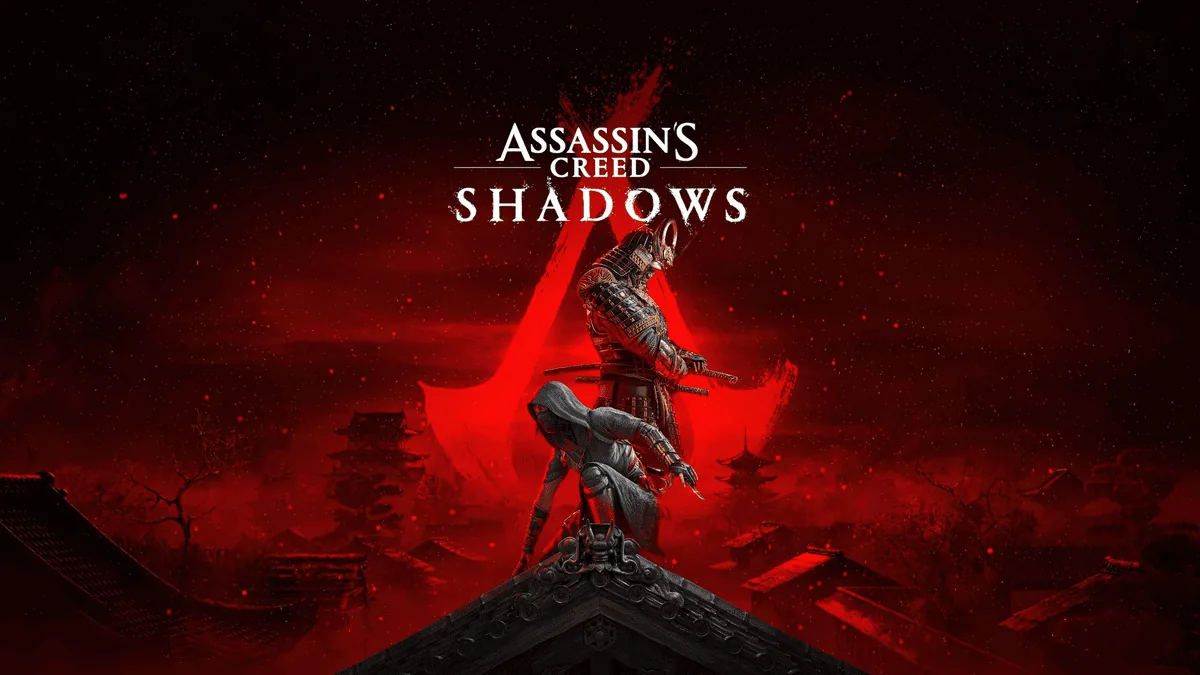
Assassin's Creed Shadows is the long-awaited Japan-set entry in Ubisoft's flagship franchise, released on March 20, 2025 for PC, PlayStation 5, and Xbox Series X/S. After years of fan requests, multiple delays, and a highly publicized pre-release controversy over its historical protagonist choices, Shadows arrived as one of the most technically polished and mechanically refined Assassin's Creed games in years.
With a Metacritic score of 81 on PS5, 78 on PC, and 82% of OpenCritic critics recommending it, Assassin's Creed Shadows earned recognition as a strong franchise entry — and delivered on Japan's extraordinary visual and historical potential in ways that critics agreed exceeded expectations.
Two Protagonists, Two Combat Philosophies
Assassin's Creed Shadows' defining design choice is a dual protagonist system with more mechanical depth than similar implementations in recent series entries:
Fujibayashi Naoe — The Shinobi
Naoe is a kunoichi from Iga Province — the historical heartland of ninja practice — and represents the best stealth gameplay the Assassin's Creed franchise has ever produced:
- Light and shadow mechanics — Naoe is genuinely invisible in darkness, visible in torchlight. Positioning relative to light sources is mechanically meaningful in ways no previous AC game achieved
- Sound detection — footstep weight, surface material, and movement speed all affect detection radius independently
- Grappling hook — vertical movement and gap-crossing traversal that expands infiltration route options significantly
- Assassination toolkit — kunai, shuriken, smoke bombs, and the hidden blade for silent eliminations
- Environmental mastery — rain masks sound, fog reduces sight lines, darkness can be created by extinguishing torches
Naoe is what Assassin's Creed stealth was always designed to be. Playing her at high skill — waiting for rain before crossing a patrol route, extinguishing a torch to create a shadow corridor, using the grappling hook to enter from an unexpected vertical angle — feels genuinely distinct from playing carelessly, and the game rewards mastery meaningfully.
Yasuke — The Samurai
Yasuke is inspired by the historical figure — a man of African origin who served under Oda Nobunaga and is documented in Japanese historical records as a person of exceptional physical strength. His gameplay is deliberately the opposite of Naoe's:
- Frontline combat — katana, nodachi, kanabo, and other heavy weapons built for direct engagement
- Crowd control — abilities managing multiple attackers simultaneously with momentum-based combat
- Resilience — higher health pool, armor systems, and defensive mechanics that allow him to operate in areas too heavily guarded for stealth
- Raw power — Yasuke can break through defenses that would require Naoe to spend significant time maneuvering around
The dual protagonist design creates genuine tactical choice. Most of the game's objectives can be approached with either character, producing substantially different play experiences. Choosing Yasuke means committing to visible, decisive efficiency. Choosing Naoe means committing to patience and invisibility. The choice matters at a mechanical level, not just a preference level.
Feudal Japan: Four Seasons of Visual Achievement
Assassin's Creed Shadows' open world spans sengoku-era Japan — the turbulent late 16th century when warlords competed to unify the country. Ubisoft's environmental team has delivered Japan with extraordinary fidelity across:
- Castle towns with layered fortifications and hierarchical social architecture
- Bustling coastal ports with trading culture and maritime economic activity
- Peaceful rural shrines surrounded by managed temple forest
- Pastoral agricultural landscapes with seasonal crop cycles
- Dense mountain forest and high mountain passes
The game's dynamic season system is its visual crown achievement. As the story progresses, the world moves through summer, autumn, and winter, transforming the landscape entirely with each cycle. Autumn in Assassin's Creed Shadows — with its maple forests in full color change, crimson leaves falling in wind, and warm late-afternoon light through the canopy — is among the most visually striking environments in recent open-world gaming. Winter brings snow accumulation that affects both player traversal and enemy patrol behavior.
Dynamic weather layers over seasonal change in real time. Rain affects Naoe's sound detection radius. Fog reduces guard sight lines. Lightning storms change patrol patterns. These are not cosmetic — they are tactical resources.
The Yasuke Controversy
Assassin's Creed Shadows faced intense pre-release scrutiny over its use of Yasuke as a playable samurai protagonist. The debate centered on historical accuracy: critics argued that Yasuke's documented historical status as a samurai was debated, and that Ubisoft was making representational choices beyond what historical record supported.
Ubisoft maintained that Shadows is a work of historical fiction — as all Assassin's Creed games have been — and that their research into the period was genuine. The game handles the material with evident care: Yasuke's characterization acknowledges his historical exceptionalism and the specific political dynamics that shaped his position under Nobunaga. His story is not one of frictionless heroism but of a person navigating an environment that constantly defined him as an outsider.
The controversy significantly affected user review scores — Metacritic's user score for the game shows notable disparity from critic consensus — but had limited correlation with critical assessment, which evaluated the game on its mechanical and narrative merits independently.
What the Game Does Exceptionally Well
Naoe's Stealth System
This is the strongest stealth in the franchise's 18-year history. Light, shadow, sound, and environmental manipulation combine in a system that genuinely rewards mastery. Playing Naoe at high skill — fully exploiting the light mechanics, using weather tactically, building infiltration routes through environmental observation — delivers a satisfaction level that comparable stealth games struggle to match.
Japan's Visual Execution
However long fans waited for a Japan-set AC game, the setting delivers on every promise. Ubisoft's recreation is gorgeous in all four seasons, historically textured without becoming didactic, and packed with cultural detail that rewards attention and exploration.
Production Quality
Shadows is the most technically polished Assassin's Creed in years. Animation quality for both protagonists is excellent. Facial capture and character expression exceed franchise norms. The structural issues that plagued Valhalla and Odyssey at launch — technical bugs, performance inconsistencies, narrative bloat in the opening hours — are notably absent.
What Holds the Game Back
Mission Structure Repetition
Despite the dual protagonist system adding genuine tactical variety, the underlying mission framework remains formulaic: identify target location, choose approach, infiltrate or engage, eliminate, escape. After 40+ hours, the loop becomes harder to ignore. Naoe and Yasuke change how you execute missions, but the missions themselves follow a recognizable template throughout.
Second-Half Story Pacing
The narrative builds momentum effectively in its first half but loses it in the final third. At approximately 40–50 hours for the main story, the game may run longer than the story strictly requires.
Open World Activities
Beyond the seasonal visual achievement and reactive weather, the open world's activities follow the established AC formula closely: viewpoint reveals, icon density, collectible structures. For players fatigued by Ubisoft's open-world template, Shadows offers refinement rather than reinvention.
System Requirements (PC)
| Spec | Minimum | Recommended | Ultra |
|---|---|---|---|
| OS | Windows 10 64-bit | Windows 10/11 64-bit | Windows 11 64-bit |
| CPU | Intel Core i7-7700 / AMD Ryzen 5 1600 | Intel Core i7-9700K / AMD Ryzen 5 3600X | Intel Core i9-12900 / AMD Ryzen 9 5900X |
| RAM | 16 GB | 16 GB | 32 GB |
| GPU | NVIDIA GTX 1660 Ti / AMD RX 5600 XT | NVIDIA RTX 2080 Super / AMD RX 6700 XT | NVIDIA RTX 4090 / AMD RX 7900 XTX |
| VRAM | 8 GB | 8 GB | 24 GB |
| Storage | 65 GB SSD | 65 GB SSD | 65 GB NVMe SSD |
Note: Ray tracing supported. DLSS 3, FSR 3, and XeSS upscaling available. Ubisoft Connect required on all platforms.
Console Performance
| Platform | Mode | Resolution | FPS |
|---|---|---|---|
| PlayStation 5 | Performance | 1440p Dynamic | 60 fps |
| PlayStation 5 | Quality | 4K | 30 fps |
| Xbox Series X | Performance | 1440p | 60 fps |
| Xbox Series S | Performance | 1080p | 60 fps |
AC Shadows vs. Recent Franchise Entries
| Title | Metacritic | Setting | Standout Feature |
|---|---|---|---|
| AC Origins | 81 | Ancient Egypt | Series reinvention |
| AC Odyssey | 83 | Ancient Greece | RPG scale |
| AC Valhalla | 83 | Viking England | Combat overhaul |
| AC Shadows | 81 | Feudal Japan | Dual-protagonist stealth |
Shadows ranks with the strongest modern entries in a franchise that has consistently delivered technically accomplished open-world games.
Frequently Asked Questions
Is Yasuke historically accurate? Yasuke was a real person — a man of African origin who served Oda Nobunaga and is documented in Japanese historical records. His exact status is debated by historians. Assassin's Creed Shadows presents a fictionalized version of his story, consistent with the franchise's approach to all historical figures.
Can you play as only one protagonist? Certain story missions and narrative sequences require their specific protagonist. However, the majority of exploration, side quests, and optional content can be approached with your preferred character.
How long is Assassin's Creed Shadows? The main story takes approximately 40–50 hours. Full completion with side content extends to 80+ hours.
Is this the best Assassin's Creed game? Critical consensus places it among the franchise's strongest modern entries, comparable to Origins. For players who value stealth above all, Naoe's toolkit may make it the best AC stealth experience available. For players fatigued by the Ubisoft open-world formula, the familiar mission structure will remain a limitation.
Score: 8/10 — Assassin's Creed Shadows fulfills the Japan setting's potential with exceptional stealth mechanics, a genuinely differentiated dual-protagonist system, and four seasons of stunning visual execution. The formulaic mission structure and second-half pacing prevent a higher score, but this is Ubisoft's most polished effort in years.